

Iran Rejects Nuclear Material Transfer, Demands US Trust-Building Measures
Rezaei says Tehran will not negotiate without steps from Washington; Asim Munir confirms Iran-Pakistan border has reopened
TEHRAN: Iran has categorically ruled out the transfer of any amount of its enriched nuclear material outside the country, with Major General Mohsen Rezaei declaring that the material constitutes a strategic national asset that will remain under Iranian control.
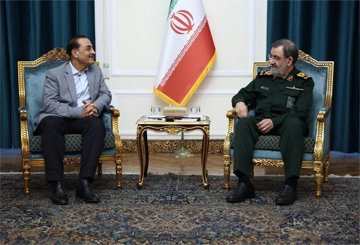
The statement came during a meeting between Major General Mohsen Rezaei, Secretary of Iran’s Supreme National Security Council, and Pakistan’s Chief of Army Staff, Field Marshal Asim Munir, amid continuing regional tensions and diplomatic efforts to address outstanding issues between Tehran and Washington.
According to the statement attributed to Rezaei, Iran would not permit even the smallest quantity of its enriched nuclear material to be taken out of the country.
“Not even the slightest amount of enriched nuclear material will be taken out of Iran,” Rezaei said, describing the material as a major asset and national treasure of the Iranian people, intended for use within the country.
His remarks underline Tehran’s firm position on retaining control of its nuclear material, an issue that remains central to the wider dispute between Iran and the United States over Iran’s nuclear programme.
Rezaei also stressed that Iran’s leadership and people remained united in their position that negotiations with the United States could not proceed without concrete confidence-building measures from Washington.
He maintained that the United States must take the first step towards rebuilding trust by meeting Iran’s stated conditions. His remarks indicated that Tehran expects tangible actions rather than assurances before considering progress in negotiations.
The Iranian official’s comments reflect the importance Iran attaches to national sovereignty, the protection of strategic assets and the conditions under which it would engage in further diplomatic efforts.
The question of enriched uranium has remained one of the most sensitive aspects of the nuclear dispute. The level of enrichment, the quantity of material held by Iran and arrangements for its future management are among the issues that can significantly influence negotiations over Iran’s nuclear activities and international concerns about the programme.
Rezaei’s reported declaration that the material would remain inside Iran signals a hard line on any proposal involving its removal from Iranian territory. However, the precise conditions Tehran has presented to Washington were not detailed in the remarks provided.
During the meeting, Rezaei also highlighted the longstanding brotherly relations between Iran and Pakistan, emphasising the close ties between the two neighbouring countries and their peoples.
Pakistan and Iran share a common border and have longstanding political, economic, cultural and religious connections. Their cooperation is also important for regional security, cross-border trade and efforts to maintain stability along their shared frontier.
Meanwhile, Field Marshal Asim Munir announced that the issue concerning the Iran-Pakistan border had been resolved and that the crossing had reopened.
“We explicitly declare that the issue concerning the Iran-Pakistan border has been resolved and that the border reopened this morning,” Munir said.
The announcement carries significance for cross-border movement, local communities and commercial activity in areas adjoining the two countries. The reopening of border crossings can help facilitate the movement of people and goods, support traders and ease difficulties for communities whose livelihoods depend on cross-border exchanges.
Pakistan and Iran have repeatedly emphasised the importance of maintaining communication and coordination to address border-related challenges. Cooperation between the two sides is also essential for preventing misunderstandings, improving security and ensuring that legitimate trade and movement can continue.
The statements by Rezaei and Munir highlighted two important aspects of the countries’ engagement: Iran’s determination to retain control over its enriched nuclear material and the reported resolution of the border issue between the neighbouring states.
The meeting also underscored the importance of sustained diplomatic engagement at a time when tensions surrounding Iran’s relations with the United States remain a major regional concern.
While Tehran continues to insist on confidence-building measures as a prerequisite for negotiations, Pakistan’s engagement with Iranian officials reflects the broader importance of maintaining regional communication and strengthening bilateral ties.
The latest developments could carry implications for diplomatic efforts, regional stability and economic exchanges between Iran and Pakistan. However, further details regarding the arrangements for the border reopening and the status of any potential negotiations between Iran and the United States were not provided in the statement.
Source: Tehran Times
