

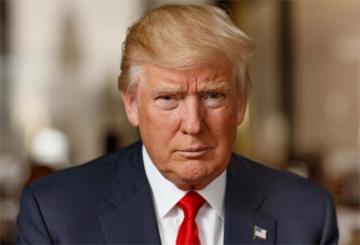
Trump Says Iran Nuclear Deal Possible but Warns US Military Action Will Resume if Talks Fail
US President Donald Trump says negotiations with Iran are progressing but cautions that Washington will restart military operations if diplomacy fails, as tensions remain high across the Middle East.
WASHINGTON: US President Donald Trump said on Monday there was a “good chance” of reaching an agreement with Iran through ongoing negotiations, but warned that the United States would resume military action if diplomatic efforts failed.
Speaking to reporters, Trump confirmed that officials from both countries were engaged in talks.
“They want to meet, and we are meeting. We’ll see what happens. There is a chance we can make a deal,” Trump said.
He added that recent US military operations had compelled Tehran to return to negotiations.
“Without what we did, they wouldn’t even be talking to us.”
While speaking aboard Air Force One, Trump stressed that time was limited for diplomacy.
“We’re talking right now. We’re having good talks. I think there’s a good chance that something could happen, and if it does, good; if it doesn’t, we go back to doing what we were doing two days ago.”
Trump Signals Limited Patience for Diplomacy
Trump also dismissed the possibility of lengthy negotiations, saying any agreement would need to be reached quickly.
“Not much time. Either it goes fast or not at all.”
His comments came after the United States suspended its two-week military air campaign against Iran on Saturday, marking another major shift in Washington’s strategy amid the ongoing regional conflict.
Drone Attacks Continue Despite Pause in US Airstrikes
Despite the temporary suspension of US strikes, regional tensions remained high as Saudi Arabia, Jordan and Iraq reported drone attacks on Monday.
Saudi Arabia announced that its air defence systems intercepted multiple drones targeting oil facilities in the Eastern Province and the capital Riyadh. Saudi officials accused Iran-backed militias operating from Iraq of launching the attacks and said the kingdom reserved the right to respond.
Meanwhile, Yemen’s Houthi movement claimed responsibility for drone attacks targeting Saudi Arabia’s East-West Pipeline leading to the Red Sea port of Yanbu, saying the operation was retaliation for alleged Saudi drone activity inside Yemeni airspace.
Iran has maintained that it is not seeking to restart formal peace negotiations with Washington but indicated it would refrain from further attacks as long as the United States maintains its pause in military operations.
Iran Maintains Control of Strait of Hormuz
Tehran also reiterated that it remains in control of the strategically important Strait of Hormuz, one of the world’s busiest oil shipping routes.
Iranian officials rejected US demands for unrestricted maritime passage and insisted that discussions with Oman regarding shipping security were unrelated to Washington.
Iran’s Foreign Ministry spokesman Esmaeil Baghaei said Tehran had not requested the resumption of talks with the United States.
“It is not in our DNA,” Baghaei said.
He also accused Washington of believing Iran would collapse within days after the conflict began, arguing instead that the United States had become trapped in a prolonged confrontation.
Netanyahu to Discuss Iran with Trump
Israeli Prime Minister Benjamin Netanyahu departed for Washington on Monday, saying Iran would be the primary focus of his meeting with President Trump.
Calling it his eighth meeting with Trump since the US president’s second term began, Netanyahu said the discussions would focus on strengthening Israel’s security and expanding regional peace efforts.
The visit comes despite an International Criminal Court arrest warrant issued against Netanyahu and former Defence Minister Yoav Gallant over alleged crimes against humanity linked to Israel’s military campaign in Gaza.
Strait of Hormuz and Regional Security Remain Flashpoints
Security concerns also continued around the Strait of Hormuz, where Iran reported intercepting several vessels it claimed attempted to use unauthorized routes after switching off navigation systems.
At the same time, shipping traffic through both the Strait of Hormuz and the Bab el-Mandeb waterway remained below normal levels following Houthi threats against Saudi exports.
Saudi Arabia and Oman also held discussions on ensuring maritime security and freedom of navigation in the Gulf.
Trump Rejects Claims of US Weapons Shortages
Trump dismissed reports suggesting the United States was running low on military supplies following weeks of operations against Iran.
“We have far more munitions than anyone in the world, and far more than we need,” Trump said.
However, reports citing unnamed US officials suggested senior military commanders had privately expressed concerns that continued large-scale operations could strain American stockpiles, prompting the temporary pause in airstrikes.
Despite the current diplomatic opening, Trump made clear that military action remains an option if negotiations fail, leaving the future of US-Iran relations uncertain.
