

Trump Hails ‘Tremendously Successful’ NATO Summit as Alliance Reaffirms Unity, Boosts Defence Spending
Trump softens stance after early criticism of allies; NATO members pledge higher defence budgets, renewed support for Ukraine, and reaffirm commitment to collective security.
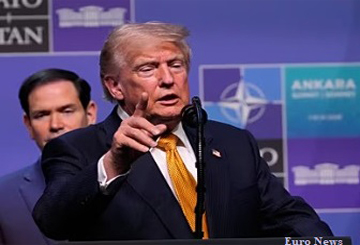
ANKARA: US President Donald Trump ended the NATO summit in Ankara on a positive note on Wednesday, praising the alliance’s unity and describing the gathering as a “tremendously successful summit” after earlier criticizing several allies over defence commitments, Greenland, and their response to the recent conflict with Iran.
The summit, attended by leaders of all 32 NATO member states, highlighted the alliance’s efforts to strengthen collective security, increase defence spending, and maintain support for Ukraine amid the ongoing war with Russia.
Speaking to reporters after the closed-door meeting, President Trump expressed satisfaction with the outcome of the summit, saying the discussions demonstrated unprecedented unity among allied nations.
“It was amazing, actually. The unity in that room was incredible. There was really a sense of solidarity,” Trump said, adding that the summit had exceeded expectations.
NATO Reaffirms Commitment to Collective Defence
According to officials familiar with the discussions, Trump reassured fellow leaders during the private session that the United States remains committed to NATO despite previous concerns over Washington’s long-term engagement.
“We want to remain with you,” Trump reportedly told allied leaders, easing speculation about the future of the US role within the alliance.
The summit concluded with a joint declaration reaffirming NATO’s “ironclad commitment” to Article 5 of the alliance’s founding treaty, which states that an attack on one member will be considered an attack on all.
The declaration was viewed as a strong signal of unity at a time when global security challenges continue to intensify.
European Allies Showcase Higher Defence Spending
A major focus of the summit was the significant increase in defence spending by European member states, aimed at addressing long-standing US concerns that Europe should shoulder a greater share of NATO’s security responsibilities.
Several European governments presented updated defence investment plans, emphasizing that they are meeting commitments to strengthen military capabilities and reduce dependence on the United States.
German Chancellor Friedrich Merz said the summit marked an important step toward a stronger and more balanced alliance.
“I’m returning to Germany with the sense that NATO is holding together, becoming stronger, and becoming more European,” Merz stated after the meeting.
Trump’s Earlier Criticism
Before the leaders met behind closed doors, Trump sharply criticized some NATO allies, accusing them of failing to fully support US military actions against Iran.
He also repeated his dissatisfaction over Denmark’s refusal to discuss the future of Greenland, once again suggesting that the strategically important Arctic territory remains of interest to the United States.
Trump additionally warned Spain that trade relations could be affected if defence commitments were not fully honoured.
However, those issues were notably absent from his remarks following the summit, reflecting a significant change in tone.
Spanish Prime Minister Pedro Sánchez later described relations with Washington as “very positive,” indicating that discussions during the summit had eased tensions.
Leaders Welcome More Constructive Dialogue
Several European officials acknowledged that Trump adopted a more cooperative approach during the closed-door discussions than in his public remarks earlier in the day.
Estonian Prime Minister Kristen Michal said the US president delivered a constructive message focused on encouraging Europe to continue increasing defence investments.
“It was a positive discussion with constructive messages about Europe stepping up its defence responsibilities,” Michal said.
Lithuanian Foreign Minister Kęstutis Budrys also dismissed suggestions that Trump’s public criticism reflected a weakening alliance.
He said disagreements among allies should not be interpreted as signs of NATO fragmentation, stressing that the transatlantic partnership remains strong.
NATO Expands Support for Ukraine
The war in Ukraine remained one of the summit’s central issues, with allied leaders reaffirming their commitment to supporting Kyiv against Russia’s continued military offensive.
During a meeting on the sidelines of the summit, Trump met Ukrainian President Volodymyr Zelenskyy and announced that the United States would allow Ukraine to manufacture Patriot air-defence missile systems under licence.
The move is expected to strengthen Ukraine’s ability to counter Russian missile attacks as supplies of US-made interceptors continue to face growing demand.
Trump also suggested that Ukraine’s recent military operations inside Russian territory could help bring both sides closer to negotiations aimed at ending the conflict.
Despite describing such operations as an escalation, he maintained that they could contribute to achieving a peace agreement.
The NATO summit declaration also confirmed that European allies and Canada would continue providing military assistance to Ukraine worth approximately €70 billion annually during 2026 and 2027.
Trump Meets Syrian President
Before concluding his visit to Ankara, Trump held talks with Syrian President Ahmed al-Sharaa, whose government is seeking greater international engagement as Syria continues rebuilding after years of civil war.
While officials did not disclose details of the meeting, it formed part of broader diplomatic engagements on the sidelines of the NATO summit.
NATO Chief Declares Alliance Stronger
NATO Secretary General Mark Rutte rejected suggestions that public disagreements had weakened the alliance, arguing that open debate among allies ultimately strengthens cooperation.
He compared NATO to a family capable of overcoming differences while remaining united against common challenges.
The Ankara summit concluded with renewed commitments to collective defence, increased military spending, continued support for Ukraine, and reassurance that the transatlantic alliance remains united despite political differences among its members.
