

US War Commission Acknowledges Pakistan’s Sacrifices during Afghanistan Conflict
Field Marshal Asim Munir highlights costs of prolonged conflict and importance of regional perspective
Regional perspective security challenges and sacrifices during two-decade US engagement in Afghanistan
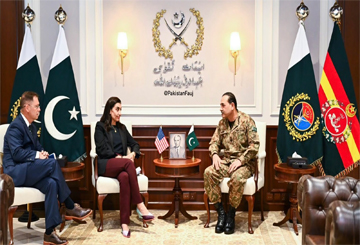
RAWALPINDI: A delegation of the U.S. Afghanistan War Commission, led by its Co-Chairs Shamila N. Chaudhary and Dr. Colin F. Jackson, called on Chief of Army Staff and Chief of Defence Forces Field Marshal Syed Asim Munir at General Headquarters (GHQ), Rawalpindi.
The delegation is visiting Pakistan as part of the Commission’s review of the United States’ 20-year engagement in Afghanistan.
During the meeting, the two sides discussed matters of mutual interest, including Pakistan’s role and support during the Afghanistan conflict, the evolving regional security environment and developments in Afghanistan.
According to the Inter-Services Public Relations (ISPR), the discussions also focused on perspectives relevant to the Commission’s ongoing assessment of the strategic, diplomatic and operational dimensions of the conflict.
Field Marshal Asim Munir shared Pakistan’s perspective on the security dynamics that shaped the conflict and highlighted the challenges faced by Pakistan during the prolonged war in Afghanistan.
The COAS and CDF stressed the importance of incorporating the regional perspective and Pakistan’s experience into any comprehensive assessment of the two-decade conflict.
He underlined that Pakistan had faced significant security challenges and consequences during the prolonged conflict in neighbouring Afghanistan, making its experience an important element in understanding the broader regional impact of the war.
The U.S. Afghanistan War Commission delegation acknowledged Pakistan’s longstanding role and sacrifices during the conflict and appreciated the country’s continued contribution to regional peace and stability.
The engagement comes as the Commission undertakes a broader review of the United States’ military, diplomatic and strategic engagement in Afghanistan over two decades, including lessons relevant to future U.S. policy and regional security.
