

Yemeni army says 30 Houthis killed in clashes west of Taiz
Fresh clashes in Taiz and attacks around key maritime routes deepen concerns over trade and energy supplies.
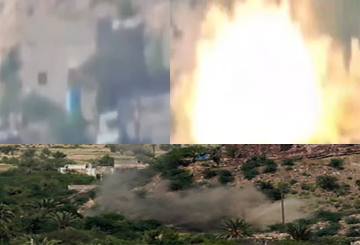
TAIZ/ROME: Fighting between Yemeni government forces and Houthi fighters intensified on Friday, with the army saying 30 Houthi combatants were killed and more than 60 wounded in clashes and airstrikes in the Al-Waziyah district west of Taiz over the previous 24 hours.
A military source quoted by the Yemeni Armed Forces Media Centre said Yemeni aircraft struck Houthi vehicles and gathering points in the fighting area. The army also said its air force targeted Houthi supply routes and deployment positions in Taiz and the Red Sea port city of Mocha.
Government forces said they had also repelled previous Houthi attacks in Taiz and struck positions and reinforcements belonging to the group. The province has emerged as one of the main fronts as fighting has intensified in several parts of Yemen.
The escalation comes as tensions around two of the region’s most important maritime chokepoints — Bab el-Mandeb and the Strait of Hormuz — raise concerns over commercial shipping and global energy supplies.
Italy said on Thursday it was prepared to act independently to help ensure the safe passage of its merchant vessels through the Bab el-Mandeb Strait rather than wait for a decision by the European Union’s Red Sea naval mission.
Italian Defence Minister Guido Crosetto said he had ordered military officials to assess the security situation and prepare a plan to guarantee safe passage through the strategic waterway, according to Italian news agency ANSA.
“We have decided not to wait for Aspides to decide whether ships can pass or not,” Crosetto said at the Risorsa Mare Forum in the northern port city of La Spezia.
He said Italy could take measures to allow its vessels to resume transit without waiting for European procedures, warning that prolonged disruption to the shipping route would increase costs and put further pressure on businesses and consumers.
The Italian frigate Bergamini is currently stationed in Djibouti, while around a dozen Italian-flagged or Italian-owned merchant vessels are seeking escorted passage, ANSA reported.
Italian authorities are also examining whether military assets already deployed in the region can temporarily be placed under national command or whether new parliamentary authorisation would be required.
The maritime concerns have been compounded by fresh fighting between Saudi Arabia and the Houthis.
Houthi-controlled television reported Saudi airstrikes in Hajjah province near the Saudi border and along areas around Taiz. Saudi civil defence said a Yemeni man living in Saudi Arabia was killed by debris from a drone intercepted over the western city of Taif. Riyadh has previously reported more than 80 people wounded in Houthi attacks.
The fighting has also triggered a new wave of civilian displacement. Yemeni civilians have crossed the Bab el-Mandeb by boat to escape violence in coastal areas.
The International Organization for Migration said more than 100,000 Yemenis have been displaced by the latest fighting, most of them within Yemen.
The narrow Bab el-Mandeb Strait, whose name means “Gate of Tears,” connects the Red Sea with the Gulf of Aden and is a critical route for international trade and energy shipments.
Meanwhile, Iran said its Revolutionary Guard naval forces had struck a Togo-flagged oil tanker in the Strait of Hormuz after the vessel allegedly attempted what Tehran described as an “illegal passage.”
Iran’s official IRNA news agency quoted the Islamic Revolutionary Guard Corps Navy as saying the tanker, identified as the Trend, was struck and stopped after a fire broke out.
The Iranian statement accused the United States of encouraging and misleading the vessel and warned that ships attempting what Tehran considers illegal passage through the strait could face further action.
There was no immediate independent verification of the reported strike or fire. Iranian authorities did not provide details about the tanker’s cargo, crew, casualties or current condition, while US officials did not immediately comment.
The developments have raised concerns over the security of energy shipments from the Gulf. The Strait of Hormuz is a crucial global oil and liquefied natural gas transit route, while Bab el-Mandeb provides an important alternative route for shipping between the Indian Ocean and the Mediterranean via the Suez Canal.
The simultaneous disruption risks around both waterways have added pressure to global energy markets.
US President Donald Trump has also indicated that Washington is considering its next steps in the conflict with Iran. Trump said he faced a “big decision” over whether to launch further major attacks, although no final decision had been announced.
Crude oil prices remained above $100 a barrel amid concerns over regional supply disruptions, while higher energy costs have added to economic pressure on consumers and businesses.
The United States and Iran have not resumed negotiations to end the conflict since an interim agreement reached in June collapsed weeks later. The conflict is expected to feature prominently in discussions at the United Nations General Assembly next week.
For civilians caught in Yemen’s latest escalation, the consequences have been immediate.
Residents from coastal communities have fled by sea toward Djibouti as fighting has spread. The IOM documented accounts of families crossing the Bab el-Mandeb in small boats, often without food or information about relatives left behind.
The latest escalation has therefore created a complex regional security challenge: fighting in Yemen is threatening a major global shipping corridor, while the separate confrontation around the Strait of Hormuz is placing additional pressure on energy markets.
With military activity increasing around both maritime chokepoints, governments and shipping companies are facing growing pressure to find secure alternatives and maintain the flow of commercial and energy shipments.
