

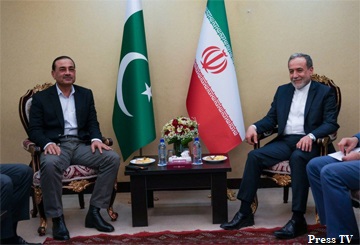
CDF Munir holds talks with Iranian FM Araghchi in Tehran
Field Marshal discusses regional developments, de-escalation efforts in meeting with Iran’s FM
Field Marshal Asim Munir held important late-night discussions in Tehran with Iranian Foreign Minister Abbas Araghchi as Pakistan intensified its diplomatic efforts to prevent a wider regional conflict involving Iran and the United States. According to Iranian state media, the meeting focused on recent diplomatic initiatives aimed at reducing tensions, maintaining the fragile ceasefire currently in place, and finding a peaceful political solution to the ongoing crisis between Tehran and Washington.
The visit highlights Pakistan’s growing role as a mediator in Middle Eastern diplomacy. Pakistan’s military media wing, the ISPR, confirmed that Field Marshal Asim Munir arrived in Tehran as part of Islamabad’s ongoing efforts to facilitate dialogue between the conflicting sides. Upon his arrival, he was warmly received by Iranian Interior Minister Eskandar Momeni. Pakistan’s Interior Minister Mohsin Naqvi also attended the reception, signaling the importance Islamabad is placing on the mission.
At the same time, concerns are growing in Washington over the possibility of renewed military confrontation with Iran. Reports from the United States indicate that President Donald Trump and his administration are considering another military operation against Iran if ongoing negotiations fail to produce a breakthrough. According to media reports, no final decision has yet been taken, but US military and intelligence agencies are reportedly continuing preparations for possible action.
The seriousness of the situation became more apparent when President Trump abruptly cancelled plans to spend the Memorial Day weekend at his golf club in New Jersey and instead returned to the White House, citing unspecified “government circumstances.” Several American military and intelligence officials also reportedly changed or cancelled holiday plans as Washington prepared for the possibility of further escalation in the Middle East.
US defense officials are said to be reviewing personnel recall lists at overseas military bases while troop movements and rotations continue across the Gulf region. These developments come amid fears that Iran could retaliate strongly if attacked again. Although direct large-scale attacks between the US and Iran have largely stopped since a temporary ceasefire came into effect in April, tensions remain extremely high.
The ceasefire itself was achieved through Pakistani mediation after weeks of dangerous escalation. Earlier this year, the United States and Israel launched strikes against Iranian targets, prompting Tehran to retaliate with missile and drone attacks against Israel and US allies in the Gulf region. Iran also closed the strategically important Strait of Hormuz, through which nearly one-fifth of the world’s oil and liquefied natural gas passes. The closure triggered major disruptions in global energy markets and increased fears of a broader economic crisis.
Pakistan later stepped in to mediate between the parties, helping secure a ceasefire on April 8. However, subsequent talks in Islamabad failed to produce a permanent agreement, leaving the truce fragile and uncertain. President Trump later extended the truce indefinitely to allow diplomacy to continue.
Diplomatic activity has intensified in recent days. Turkish Foreign Minister Hakan Fidan held telephone conversations with Abbas Araghchi and also consulted with Qatar’s Prime Minister and Foreign Minister Mohammed bin Abdulrahman Al Thani, along with Pakistani mediators. These discussions focused on the latest stage of negotiations between Iran and the United States and explored ways to reduce tensions and prevent another military confrontation.
Qatar has also dispatched a negotiating team to Tehran, reportedly working in coordination with Washington to help bridge differences between the two sides. Diplomats involved in the negotiations say some progress has been achieved, but major disagreements still remain unresolved.
One of the biggest sticking points is Iran’s enriched uranium stockpile. Iran insists its nuclear activities are solely for peaceful purposes and refuses to surrender its enriched uranium reserves or discuss limitations on its defensive military capabilities. On the other hand, the United States and Israel argue that Iran’s nuclear program could eventually lead to the development of nuclear weapons, an accusation Tehran strongly denies.
Another major dispute concerns control of the Strait of Hormuz. Iran has reportedly proposed a tolling system for ships passing through the waterway, a move strongly opposed by Washington. US Secretary of State Marco Rubio described the proposal as “unacceptable” and warned that the United States remains prepared for all possible outcomes if negotiations collapse.
Speaking after a NATO ministers’ meeting in Sweden, Rubio acknowledged that some diplomatic progress had been made but cautioned that a final agreement was still far away. He described the negotiations as difficult and stressed that more work was needed before any breakthrough could occur.
Iranian officials also signaled that deep differences continue to exist. Iranian Foreign Ministry spokesman Esmaeil Baghaei stated that diplomacy takes time and indicated that negotiations had not reached a stage where an agreement appeared imminent. He further said that nuclear matters were not currently being discussed in detail and warned that talks would fail if the United States attempted to dictate terms regarding Iran’s highly enriched uranium reserves.
Meanwhile, Iran’s Islamic Revolutionary Guard Corps warned earlier this week that any future attacks by the United States or Israel could dramatically expand the conflict beyond the Middle East. Iranian officials continue to maintain that the country has the right to defend itself against foreign aggression and preserve its strategic capabilities.
Despite the ongoing tensions, mediation efforts led by Pakistan, Türkiye, and Qatar continue as regional and global powers attempt to avoid another major war in the Middle East that could severely impact global security and energy supplies.
