

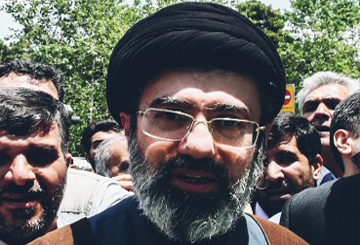
Iran Has Become Too Strong for Its Enemies to Turn Back the Clock, Mojtaba Khamenei
Leader says Iran’s defense capabilities and national resilience have fundamentally changed since the Revolution
TEHRAN: Iran’s era of foreign domination, dependence and humiliation has ended forever, Leader of the Islamic Revolution Ayatollah Seyed Mojtaba Hosseini Khamenei said, asserting that the country has transformed into an independent and powerful state with a prominent position in the Islamic world.
In a message issued on September 28 to mark Sacred Defense Week and the second anniversary of the martyrdom of former Hezbollah Secretary General Seyed Hassan Nasrallah, Ayatollah Khamenei said Iran’s eight-year Sacred Defense had fundamentally transformed the country and strengthened the Islamic Republic against external pressure and aggression.
The Leader said Iran before the 1979 Islamic Revolution had been subjected to foreign influence and interference, particularly by Western powers, with the country’s affairs heavily shaped by outside forces.
He said the Islamic Revolution led by Imam Khomeini ended that period of dependence and established the Islamic Republic on the basis of independence and self-determination.
According to Ayatollah Khamenei, the war imposed by the Baathist regime of Iraq represented a major attempt by Iran’s adversaries during the first decade of the Islamic Republic to reverse the course of the Revolution.
He said Iran instead emerged from the eight-year conflict stronger, more resilient and better prepared to confront future challenges.
The Leader contrasted Iran’s limited defensive capabilities in the early years following the Revolution with the country’s present military and technological capabilities, saying Iran had developed the means to confront its adversaries and defend its interests.
“The past days that our enemy wishes to return have passed and will never be repeated,” Ayatollah Khamenei said, stressing that Iran’s future would be shaped by the experiences gained through the Islamic Revolution and the Sacred Defense.
He also referred to the country’s continuing tensions with regional and international adversaries, including developments surrounding the Strait of Hormuz.
Ayatollah Khamenei said those who had previously sought to dominate Iran were now facing a country whose defense capabilities had undergone a fundamental transformation compared with previous decades.
He also praised the role of different sections of Iranian society in supporting the country’s defense, particularly highlighting the growing participation of women in public life and national causes.
The Leader said various segments of Iranian society had stood behind what he described as Iran’s legitimate positions, including its stance concerning the Strait of Hormuz.
Ayatollah Khamenei further said Iran’s present achievements should be viewed in light of the sacrifices made by Imam Khomeini and the late Leader of the Islamic Revolution Ayatollah Seyed Ali Khamenei, saying their leadership and legacy had contributed to the country’s current standing.
Turning to Lebanon, the Leader paid tribute to Seyed Hassan Nasrallah on the second anniversary of his martyrdom, describing him as a prominent figure of the resistance front and a committed advocate of the Lebanese people and the cause he represented.
He praised Nasrallah’s speeches and actions, saying they strengthened the resolve of his supporters and Resistance forces while enhancing Lebanon’s position in the region.
Ayatollah Khamenei also highlighted Nasrallah’s role in the history of the resistance, saying his legacy continues under Hezbollah Secretary General Sheikh Naim Qassem.
He said the current period in Lebanon would remain an important chapter in the history of the resistance, adding that the sacrifices of Nasrallah, Seyed Hashem Safieddine and other Resistance fighters would continue to influence future generations.
The Iranian Leader concluded by expressing hope that, with divine assistance, the Iranian people and the Resistance Front would continue to achieve “victory, triumph and dignity,” while their adversaries would face defeat and humiliation.
