

Iran Strikes US Bases in Jordan in Retaliation for American Attacks
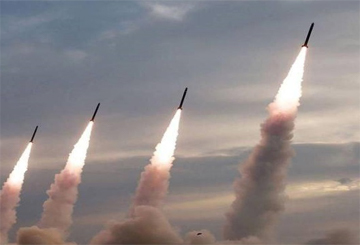
TEHRAN/WASHINGTON: Iran on Monday said it had launched ballistic missile attacks on US military targets in Jordan in retaliation for recent American strikes on Iranian territory, marking a fresh escalation in the six-month-old conflict between Tehran and Washington.
Iran’s Islamic Revolutionary Guard Corps (IRGC) said its forces targeted two US military bases in Jordan, a key US ally in the region, claiming that the attacks caused “heavy damage.”
Jordan’s military, however, said it had intercepted eight missiles but did not identify their origin.
The latest exchange of fire followed US strikes on Iranian rocket launchers positioned on a small island in the Strait of Hormuz. Washington said the operation was carried out to prevent Iran from laying additional sea mines in the strategic waterway.
“US forces took limited, precise action against IRGC minelaying forces posing an imminent threat in the Strait of Hormuz,” US Central Command said in a statement posted on social media.
The IRGC said the US attack had caused casualties and described its missile strikes on Jordan as a response to what it called “US-Zionist aerial aggression.”
The escalation comes as the conflict enters its sixth month, despite a reduction in the intensity of fighting in recent weeks. The latest confrontation has also raised fresh concerns about the security of the Strait of Hormuz, one of the world’s most important energy transit routes.
Strait of Hormuz remains flashpoint
The United States said its forces had recently completed operations to clear sea mines from international shipping routes in the Strait of Hormuz.
“Last week, CENTCOM completed clearing sea mines from the strait’s international shipping routes,” US Central Command spokesman Navy Captain Tim Hawkins said.
He added that US forces were continuing to monitor the area and remained prepared to protect commercial shipping through the strategic waterway.
Before the conflict, roughly one-fifth of the world’s oil supply passed through the Strait of Hormuz. Iran’s effective restrictions on shipping through the waterway have disrupted global energy markets and contributed to higher prices for oil, fuel and other commodities.
Trump threatens Iran’s oil lifeline
US President Donald Trump separately claimed that Iran’s major energy hub, Kharg Island, was being destroyed following American military action.
“Kharg Island being blown to smithereens!!!” Trump said in a social media post, without providing further details.
Kharg Island is critical to Iran’s oil industry and previously handled the vast majority of the country’s crude oil exports. Any sustained attack on the island could severely affect Iran’s ability to export oil and further deepen pressure on its economy.
The United States had also targeted Iranian rocket launchers on another island in the Strait of Hormuz, marking the first publicly acknowledged American strikes against Iran since late July.
Diplomatic efforts face setbacks
The renewed fighting comes despite months of diplomatic efforts by regional mediators, including Pakistan and Qatar, aimed at ending the conflict.
A ceasefire reached in April helped halt the most intense phase of fighting, while a memorandum of understanding on a potential final peace agreement was signed in June. However, no comprehensive settlement has been reached.
Washington has increasingly relied on economic pressure against Tehran, describing its approach as “economic warfare,” while a US naval counterblockade of Iranian ports has added pressure on Iran’s fuel supplies.
The April ceasefire significantly reduced direct fighting, but sporadic attacks, particularly around the Strait of Hormuz, have continued to undermine prospects for a lasting peace agreement.
The United States said its previous strike on Iran had taken place on July 29 in response to what it described as an attempted surprise attack on American forces in the region. Earlier in July, US forces carried out attacks against Iran for 13 consecutive nights.
Iran has repeatedly responded to US military operations by targeting American installations and allied facilities across the Gulf region, including in Kuwait, Oman, Saudi Arabia and the United Arab Emirates.
Global markets feel impact
Iran’s restrictions on the Strait of Hormuz have had repercussions far beyond the Middle East, contributing to shortages and higher prices for energy and fertiliser supplies.
Oil prices rose following the latest US strikes. Brent crude, the international benchmark, climbed above $90 a barrel, while West Texas Intermediate crude rose above $85.
The conflict has also become a politically sensitive issue in the United States ahead of the November midterm elections, with concerns that the war could affect Republican control of Congress.
US Senator Jack Reed, the top Democrat on the Senate Armed Services Committee, criticised the Trump administration’s handling of the conflict.
“Six months later, not a single objective has been achieved,” Reed said in a statement, arguing that the war had weakened the US position in the Middle East and internationally.
The latest Iranian missile strikes and US military operations have further complicated diplomatic efforts to end the conflict, while the continued tensions around the Strait of Hormuz remain a major threat to regional stability and global energy supplies.
