

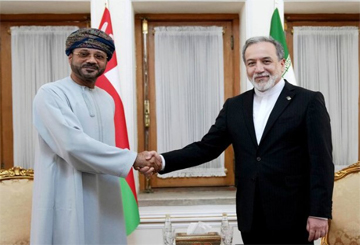
Iran, Oman agree on temporary maritime corridor in Hormuz
TEHRAN: Iran and Oman have agreed to establish a temporary joint maritime corridor through the Strait of Hormuz and launch a joint project to clear mines from the strategic waterway, according to a joint statement issued during Omani Foreign Minister Sayyid Badr Hamad Al-Busaidi’s visit to Iran on Tuesday.
Iranian Foreign Minister Abbas Araghchi and his Omani counterpart held what the statement described as “constructive consultations” focused on restoring safe navigation through the Strait of Hormuz while respecting the sovereignty and sovereign rights of both countries.
The two sides discussed a phased framework aimed at providing a practical basis for restoring safe maritime traffic through the strait following the recent war and its repercussions.
Under the proposed framework, Iran and Oman will establish a temporary joint navigational corridor through the Strait of Hormuz and cooperate on a project to clear mines from the waterway.
The joint statement said technical negotiations would continue with the aim of reaching an agreement on a permanent navigational corridor and arrangements for the future administration of the strait.
The talks will also address mechanisms for information-sharing, traffic management, and the provision of navigational and security services to ensure the safety of maritime traffic.
Iran and Oman further stressed the importance of holding joint discussions with other regional states bordering the waters of the Persian Gulf.
Both sides reaffirmed the need to comply with applicable international law and respect the sovereign rights of coastal states.
The Strait of Hormuz is one of the world’s most strategically important maritime routes, connecting the Persian Gulf with the Gulf of Oman and the wider Arabian Sea. Any disruption to navigation through the waterway can have significant implications for regional trade and global energy markets.
The agreement between Tehran and Muscat is aimed at creating a practical mechanism for restoring safe navigation while broader discussions continue over the long-term management and security of the strategic waterway.
