

Iran Says Security Will Not Return to Strait of Hormuz as Long as US Continues War
Tehran says seven-point demands remain unchanged, calls for lifting of blockade, end to hostilities and release of frozen assets
TEHRAN: Iran has warned that security will not return to the strategically important Strait of Hormuz as long as the United States continues the war, insisting that Tehran will not abandon its rights despite Washington’s claims that Iran has lost its leverage.
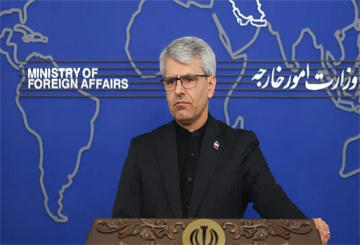
Iranian Foreign Ministry spokesperson Esmaeil Baqaei made the remarks during his weekly press conference on Monday, rejecting US President Donald Trump’s statements about the situation in the vital waterway. He said Washington’s claims did not reflect realities on the ground and would not change Iran’s position.
“The Americans can keep saying that Iran has lost its leverage, but we will continue doing our work,” Baqaei said, adding that global markets operate according to their own dynamics and are not necessarily influenced by American statements.
The spokesperson stressed that the developments in the Strait of Hormuz were not intended to create leverage over the United States or other countries. Instead, he attributed the situation to what he described as US and Israeli aggression, saying Iran had taken measures in accordance with international law.
“As long as the US continues the war, security will not return to this waterway,” Baqaei said.
He maintained that Tehran did not welcome the prevailing situation but argued that Washington’s actions had created serious problems for the region and the wider international community. The Strait of Hormuz is a critical international shipping route, particularly for global energy supplies, making stability in the waterway a major concern for regional countries and international markets.
Iran’s seven-point demands remain on the table
Addressing questions about recent remarks by Mohsen Rezaei, secretary of Iran’s Supreme National Security Council, concerning a possible response to the United States, Baqaei said communications through mediators were continuing.
He explained that the points discussed in New York reflected Iran’s legitimate demands and had already been the subject of extensive discussions. The seven-point framework includes lifting the blockade, ending the war on all fronts and releasing Iran’s frozen assets.
“Whatever was included in the Islamabad memorandum of understanding remains in place,” Baqaei said.
He added that the United States had imposed additional sanctions in the meantime, arguing that the new restrictions would also have to be lifted as part of efforts to address the outstanding issues.
Baqaei’s remarks indicate that Tehran continues to regard the understandings discussed in Islamabad as an important reference point in the ongoing diplomatic process, despite the additional sanctions and continuing differences between the two sides.
Tehran questions US position on nuclear issue
The Iranian spokesperson also criticised Washington’s continued emphasis on Iran’s nuclear programme, saying the United States continued to present the issue as its principal concern while repeatedly raising the prospect of nuclear weapons.
He suggested that the current diplomatic proposals had so far failed to adequately address Iran’s concerns and stressed that Tehran would have to prioritise its national interests under the prevailing circumstances.
Baqaei said Iran was reviewing the issues raised by the United States and would communicate its response to the mediators after completing its assessment.
His comments suggest that diplomatic contacts have not been abandoned, although major differences remain over sanctions, the blockade, the scope of a possible cessation of hostilities and the nuclear issue.
With communications continuing through intermediaries, the next steps will depend on the positions adopted by Washington and Tehran and whether the outstanding demands can be addressed through negotiations.
Iran’s latest statement also underscores the connection Tehran is drawing between an end to the conflict and the restoration of security in the Strait of Hormuz, a waterway whose stability carries significant implications for regional security, international shipping and global energy markets.
