

IRGC Mocks US ‘Epic Fury’ Operation, Says Wars Are Decided on Battlefield, Not Twitter
TEHRAN: Iran’s Islamic Revolutionary Guard Corps (IRGC) has mocked the United States over its military campaign against Iran, saying the outcome of a war is determined on the battlefield rather than through statements and messages posted on social media.
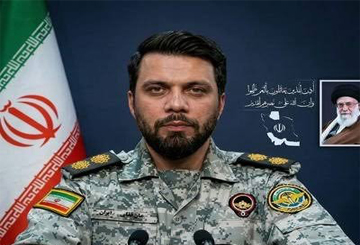
IRGC spokesman Ebrahim Zolfaghari delivered the pointed remarks in English, directly targeting US President Donald Trump and his military forces. He argued that Washington’s public statements could not determine the course or outcome of the conflict.
“The outcome of the war is determined on the battlefield, not through tweets,” Zolfaghari said, according to reports of his remarks.
He further taunted Trump by saying there were locations where the US president and American forces “do not dare to approach,” suggesting that Washington was willing to speak about areas that its forces were unwilling or unable to reach militarily.
The comments represented another escalation in the increasingly confrontational rhetoric between Tehran and Washington, as Iranian officials continue to portray the conflict as a test of military strength and endurance rather than one that can be decided through political messaging.
IRGC mocks name ‘Epic Fury’
Zolfaghari also took aim at the name given to the US military operation, “Epic Fury.”
In a sarcastic reference, the IRGC spokesman suggested that the campaign would be more appropriately named “Epic Fear” rather than “Epic Fury,” turning the US operation’s official name into a rhetorical weapon against Washington.
The remark appeared designed to challenge the image of American military dominance and suggest that the operation had not produced the decisive result Washington sought.
By contrasting “fury” with “fear,” the Iranian military spokesman sought to portray US actions as evidence of apprehension rather than overwhelming confidence. The statement also reflects Tehran’s broader effort to project defiance and maintain the image that Iranian forces remain capable of confronting the United States.
‘War is not decided on social media’
Zolfaghari’s comments placed particular emphasis on the role of social media in modern political and military messaging.
His reference to “tweets” was widely interpreted as a direct jab at Trump’s frequent use of social media to issue political and military statements. The IRGC spokesman sought to draw a distinction between public declarations and military realities on the ground.
For Tehran, the message was clear: statements made online cannot substitute for military achievements.
The remarks also underscore how social media has become an important part of the information battle surrounding the conflict. Both sides have used public statements, videos and online messages to shape perceptions of military developments and demonstrate resolve.
Tehran seeks to project confidence
The IRGC statement comes against a backdrop of intense tensions between Iran and the United States. Iranian officials have repeatedly emphasized that Tehran will respond to military pressure and will not accept attempts to dictate the outcome of the conflict through threats.
The latest remarks therefore serve two purposes. Domestically, they reinforce the Iranian government’s message that the country remains capable of resisting external pressure. Internationally, they send a warning that Tehran does not consider public US declarations sufficient to force Iran into submission.
The language used by Zolfaghari was deliberately confrontational, particularly his claim that there are areas where American forces “do not dare to approach.” Such statements are intended to emphasize Iran’s ability to impose risks and costs on a much more powerful military adversary.
Information warfare becomes part of the conflict
The exchange also highlights the growing importance of information warfare alongside conventional military operations.
In modern conflicts, governments and military organizations increasingly use social media to communicate with domestic audiences, supporters and opponents. Military operations are therefore accompanied by competing narratives over who has the advantage, which targets have been struck and whether attacks have achieved their objectives.
Iran has sought to counter US claims and portray American military action as less effective than Washington suggests. The “Epic Fear” remark fits into that strategy by attempting to undermine the symbolism behind the US operation’s official name.
At the same time, the US and its allies have their own narrative regarding the military campaign and its objectives.
A message directed at Trump
Zolfaghari’s decision to make the statement in English added another dimension to the message. Rather than addressing only an Iranian domestic audience, the IRGC spokesman appeared to be speaking directly to Trump, the US administration and an international audience.
His remarks were therefore both a military warning and a political challenge.
The core message from Tehran was that Iran does not believe the conflict can be settled through threats, online statements or political declarations. Instead, Iranian officials insist that the decisive test will be what happens in the military arena.
The statement is likely to add to the already sharp rhetoric surrounding the conflict, particularly as both Washington and Tehran continue to seek to demonstrate strength and discourage the other side from believing it can secure an easy victory.
For now, the IRGC’s “Epic Fear” jibe has become another example of the psychological and information battle accompanying the wider military confrontation.
The exchange demonstrates that alongside missiles, aircraft and military operations, both sides are also fighting for control of the narrative — and Tehran is making clear that it intends to contest Washington’s claims both on the battlefield and in the public arena.
