

PM Shehbaz says Pakistan to Host Formal Signing of US–Iran Peace Agreement in Geneva on June 19
PM hails the understanding as a ‘historic milestone’, calls it a matter of collective pride
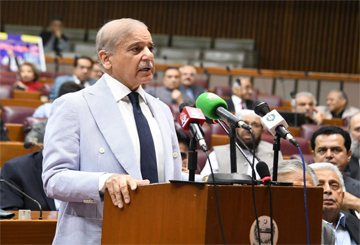
ISLAMABAD: (Khawar Abbas Shah) Prime Minister Shehbaz Sharif announced on Monday that Pakistan will host the formal signing ceremony of a historic peace agreement between the United States and Iran in Geneva on June 19. The agreement follows months of intensive negotiations and is expected to mark a significant turning point in regional and global diplomacy.
Addressing the National Assembly, Prime Minister Shehbaz Sharif described the development as a landmark achievement for international peace and stability. He stated that after a prolonged period of tensions and uncertainty, both the United States and Iran had agreed to an immediate and permanent cessation of military operations on all fronts, including activities related to Lebanon.
Opening his speech, the prime minister said that the world had crossed a historic milestone. Referring to the agreement as a symbol of hope and reconciliation, he remarked that after the darkness of war, the dawn of peace had finally emerged. He noted that the breakthrough came after three months of extraordinary diplomatic efforts and complex negotiations.
The prime minister congratulated the Pakistani nation, members of parliament, and the international community on the achievement. He emphasized that Pakistan had played a constructive and responsible role in facilitating diplomatic engagement between the two countries. According to him, the agreement represents not only a resolution between the United States and Iran but also a triumph of peace, dialogue, and diplomacy over conflict and confrontation.
The Iranian Ambassador was present in the National Assembly gallery during the proceedings, highlighting the significance of the occasion.
Prime Minister Shehbaz Sharif expressed gratitude to political leaders across party lines for their support throughout the diplomatic process. He specifically thanked former prime minister Nawaz Sharif for his guidance and acknowledged the contributions of President Asif Ali Zardari, Pakistan Peoples Party Chairman Bilawal Bhutto Zardari, Deputy Prime Minister and Foreign Minister Ishaq Dar, and several other political figures who supported the peace initiative.
The prime minister stressed that the achievement belonged to the entire nation and that all political stakeholders deserved recognition for their efforts in promoting peace and stability.
He further highlighted the role of Pakistan’s civil and military leadership in advancing diplomatic efforts. Special appreciation was extended to Field Marshal Asim Munir and National Security Adviser Lieutenant General Asim Malik for their contributions to supporting regional peace initiatives.
Prime Minister Shehbaz also acknowledged the role played by key international leaders in bringing the agreement to fruition. He thanked US President Donald Trump, Iran’s leadership, including Supreme Leader Mojtaba Khamenei and President Dr. Masoud Pezeshkian, as well as members of the negotiating teams from both countries.
Additionally, he praised Qatar’s Emir Sheikh Tamim bin Hamad Al Thani, Saudi Crown Prince Mohammed bin Salman, Turkish President Recep Tayyip Erdogan, and Chinese President Xi Jinping for their support of diplomatic efforts and their commitment to fostering peace in the region.
The prime minister noted that Pakistan had actively supported negotiations through diplomatic channels and the efforts of its Foreign Ministry. He pointed out that the conflict had created economic pressures across the world, including in Pakistan, but timely policy decisions had helped mitigate the impact and protect citizens from severe inflationary consequences.
Looking ahead, Shehbaz Sharif called for greater unity among federal and provincial governments as well as political parties. He stated that Pakistan would continue working to ensure that the benefits of improved global stability and economic conditions are passed on to ordinary citizens.
Concluding his address, the prime minister reaffirmed Pakistan’s commitment to promoting peace, dialogue, and stability both regionally and internationally.
Defence Minister Terms Agreement a Historic Diplomatic Success
Earlier during the National Assembly session, Defence Minister Khawaja Asif described the peace agreement between Iran and the United States as one of Pakistan’s greatest diplomatic achievements. He stated that the agreement, scheduled for formal signing on Friday, had significantly enhanced Pakistan’s reputation and influence on the global stage.
According to the defence minister, Pakistan’s leadership demonstrated vision, wisdom, and effective diplomacy throughout the process. He argued that the international recognition and respect earned through these efforts were unmatched and ranked among the most important accomplishments in the country’s 78-year history.
Khawaja Asif emphasized that Pakistan’s diplomatic campaign was driven by a commitment to peace and regional stability. He recalled that the country had previously demonstrated strength on the military front and expressed confidence that similar success could now be achieved in the economic sphere.
The minister also thanked the United States for choosing diplomacy and peace, while recognizing concerns raised by Iran during negotiations. He congratulated the Iranian leadership and people for maintaining unity during a highly sensitive and challenging period.
Speaker Congratulates Nation
At the beginning of the session, National Assembly Speaker Sardar Ayaz Sadiq congratulated the Pakistani nation on what he described as a major diplomatic accomplishment. He praised the efforts of Prime Minister Shehbaz Sharif, Deputy Prime Minister Ishaq Dar, Field Marshal Asim Munir, Interior Minister Mohsin Naqvi, National Security Adviser Lieutenant General Muhammad Asim Malik, and officials of the Foreign Office for their contributions to the peace process.
The speaker noted that Pakistan’s role in helping facilitate understanding between the United States and Iran had strengthened the country’s international standing and demonstrated its commitment to peace, dialogue, and diplomatic engagement.
