

Iran says US sent revised comments through Pakistan despite rejecting proposal
Iranian FM spokesperson confirms Tehran’s views were conveyed to the American side through Pakistan
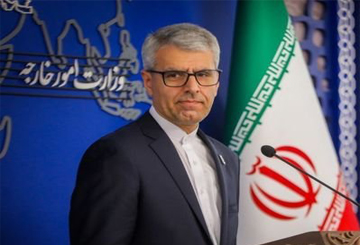
Pakistan has shared a revised Iranian proposal with the United States in an effort to revive stalled negotiations aimed at ending the escalating conflict in the Middle East, according to a Pakistani source cited by Reuters. The source said time is running out for diplomacy, warning that both Iran and the US continue to shift their positions, making progress difficult. Iranian Foreign Ministry spokesperson Esmaeil Baghaei confirmed that Iran’s stance has been communicated to Washington through Pakistan’s mediation channel.
US President Donald Trump has described the existing ceasefire, reached earlier in April, as being “on life support,” suggesting that major disagreements between the two sides remain unresolved. The key sticking points in the talks include Iran’s nuclear program and tensions over the Strait of Hormuz, a critical global shipping route responsible for transporting around one-fifth of the world’s oil and liquefied natural gas. Iran has reportedly disrupted shipping activity in the region during the ongoing tensions.
Iran has demanded a comprehensive settlement that includes an end to all regional conflicts, including in Lebanon where US ally Israel is engaged with Iran-backed Hezbollah, along with compensation for war damage, lifting of the US naval blockade, guarantees against future attacks, and the resumption of Iranian oil exports. Tehran has refused to negotiate its nuclear program unless there is a permanent end to hostilities. Baghaei also stated that Iran is fully prepared for all possible scenarios and warned that even minor actions by the opposing side would receive an appropriate response.
Iran’s Supreme National Security Council has announced the creation of a new body called the Persian Gulf Strait Authority to oversee operations and provide real-time updates on developments in the Strait of Hormuz, signaling increased focus on the strategic waterway.
Meanwhile, several regional reactions have emerged as tensions rise. Kuwait and Qatar have strongly condemned drone attacks targeting Saudi Arabia that reportedly originated from Iraqi airspace, calling them violations of sovereignty and international resolutions. Saudi Arabia confirmed it intercepted three drones entering its airspace from Iraq. Oman has also condemned a separate drone incident that caused a fire near the UAE’s Barakah Nuclear Energy Plant, urging restraint and dialogue. The United Nations Secretary-General António Guterres expressed deep concern, warning that attacks near civilian infrastructure, especially nuclear facilities, are unacceptable and must stop immediately.
In the United States, former congresswoman Marjorie Taylor Greene warned that deploying US troops into Iran could trigger significant political backlash at home, reiterating opposition to foreign military interventions.
Iran has also issued strong warnings regarding maritime tensions, with senior military adviser Major General Mohsen Rezaei stating that continued US pressure and blockade measures could turn the Gulf of Oman into a “graveyard” for US naval forces. He emphasized that while Iran keeps the Strait of Hormuz open for trade, it would oppose foreign military operations in the region and consider blockades as acts of war.
At the same time, reports suggest Israel has expanded covert military activity in Iraq through secret bases allegedly used for operations against Iran, including logistical and air support functions. Iraqi officials have partially acknowledged unusual activity but deny allowing foreign forces to use their territory for attacks. Israeli media also report that Israel is preparing for the possibility of renewed conflict alongside the United States, while being placed on high alert amid rising tensions.
Iraq has stated firmly that its territory will not be used as a launchpad for attacks on other countries and reiterated its policy of avoiding involvement in regional conflicts.
Global oil markets have reacted strongly to the escalating situation, with Brent crude rising above $111 per barrel and US WTI climbing past $107 per barrel. The surge comes amid fears that continued instability around the Strait of Hormuz and drone attacks in the Gulf region could disrupt global energy supplies and keep prices elevated.
Overall, despite ongoing mediation efforts led by Pakistan, negotiations between Iran and the United States remain fragile, with major political, military, and economic tensions continuing to drive uncertainty across the region.
