

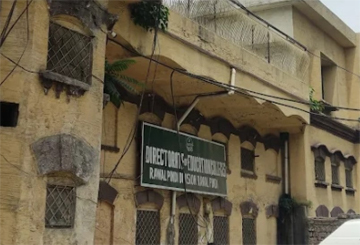
Allegations Raise Questions Over Governance in Rawalpindi Education Department
Pakistan is often portrayed as a country governed by laws, yet in reality it increasingly appears to be governed by influence, privilege, and unchecked power. The system claims to uphold rules and regulations, but in practice, enforcement is selective, inconsistent, and frequently absent where it matters most.
What emerges instead is a structure where authority is not used as a responsibility but as a tool of personal advantage. Individuals in powerful positions are often accused of bending systems to their will, accumulating roles, and operating beyond meaningful accountability, while the very institutions meant to check such behavior remain silent or ineffective.
A striking example is reportedly found within the Punjab Higher Education Department in Rawalpindi, where a Deputy Director of Colleges is said to be holding multiple positions simultaneously. Such situations raise serious questions about institutional control, administrative transparency, and whether accountability is truly enforced—or merely written on paper while power operates without restraint.
Like this “Serious allegations of misconduct, abuse of authority, and influence peddling have surfaced against Mr. Amjad Iqbal Khattak, who is currently serving as Deputy Director Colleges, Rawalpindi, in the Punjab Higher Education Department. The allegations, coming from internal sources within the directorate, have raised concerns about administrative practices, financial compliance, and transparency in senior postings.”
According to insider reports, Mr. Khattak is accused of holding multiple administrative responsibilities simultaneously, including his substantive post as Deputy Director Colleges, additional charge of Director Colleges Rawalpindi Division, and Secretary of the Board of Intermediate and Secondary Education (BISE) Rawalpindi. Critics claim that holding several key positions at the same time may constitute a violation of service rules and administrative procedures. It is further alleged that this arrangement may have led to unauthorized drawal of allowances and financial irregularities, although no official audit findings have been publicly released so far.
The situation has reportedly caused unrest among clerical and teaching staff within the department. Employees have allegedly expressed concerns over what they describe as high-handed administrative behavior, arbitrary decision-making, and favoritism toward certain individuals. Some staff members claim that disciplinary actions and suspensions were issued in a manner they consider unjustified. Principals and other officials are also said to have developed anxiety regarding postings and administrative decisions, which they believe are being influenced beyond official frameworks.
Sources further allege that Mr. Khattak has demonstrated influence within the departmental hierarchy. It is claimed that he has made remarks suggesting he holds significant control over senior-level administrative decisions, including the ability to affect the transfer or removal of high-ranking officers. Allegations also include claims that he expressed confidence in influencing the outcomes of senior promotion processes within the Higher Education Department.
More serious accusations suggest that he claimed he could challenge or reverse recently completed interviews for director-level appointments and push for the reconstitution of selection panels. It is also alleged that he attempted to include his own name in discussions related to promotion committees, although these claims remain unverified and have not been confirmed by any official inquiry.
In addition to administrative allegations, Mr. Khattak is also accused of supporting corrupt practices and misusing official authority for personal benefit. Complainants have called for immediate suspension and the initiation of a high-level investigation under the Punjab Civil Servants (Efficiency & Discipline) Rules. They have demanded a comprehensive inquiry into alleged violations related to multiple charges, financial management, and interference in recruitment and promotion processes.
As of now, neither the Punjab Higher Education Department nor the Anti-Corruption Establishment Punjab has issued any official confirmation or denial regarding these allegations. Mr. Khattak continues to serve in his official capacity as Deputy Director Colleges, Rawalpindi Division.
The matter has sparked wider discussion about governance standards within the provincial education system. It has raised important questions regarding administrative accountability, transparency in postings, and the integrity of recruitment and promotion mechanisms in public sector institutions. Stakeholders are now calling for greater oversight to ensure that departmental procedures remain fair, transparent, and in accordance with established rules and regulations.
