

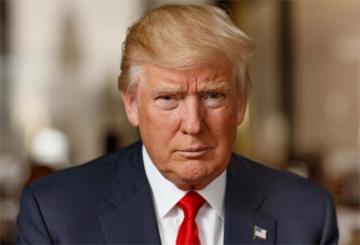
Trump says Iran war will end ‘soon’ because ‘there’s practically nothing left to target’
Iran’s IRGC hits two vessels attempting to navigate Strait of Hormuz
US President Donald Trump has claimed the war with Iran could conclude “soon,” asserting there is “practically nothing left to target.” Speaking in a five-minute phone interview with Axios on Wednesday, he said, “Little this and that… Any time I want it to end, it will end.”
Despite Trump’s remarks, US and Israeli officials report there is no official directive yet on when hostilities might cease.
IRGC Strikes Vessels in Strait of Hormuz
Iran’s Islamic Revolutionary Guard Corps (IRGC) said on Wednesday that it struck two vessels attempting to navigate the strategic Strait of Hormuz after ignoring warnings.
The IRGC stated that the vessel Expres Room, flying the Liberian flag and owned by what it called the “Zionist regime,” was hit with Iranian projectiles. Another container ship, Mayuree Naree Bangkok, was also struck after disregarding alerts.
The IRGC warned, “We will not allow even a single litre of oil to pass through the Strait of Hormuz for the benefit of the US, the Zionist regime, or their partners.”
Additionally, Iranian forces claimed a drone attack hit several Israeli military targets, including the intelligence directorate AMAN, Unit 8200, Green Pine radar, and a naval submarine headquarters in Haifa.
Oil and Global Markets on Edge
Iran’s military warned that oil prices could reach $200 a barrel due to regional instability. The recent attacks have targeted three more ships in the Gulf, escalating fears over global energy supplies.
While oil prices initially surged, they have eased slightly, and stock markets have rebounded as investors hope for a quick resolution to the conflict. However, the Strait of Hormuz remains unsafe for navigation, disrupting roughly a fifth of global oil supplies—the worst disruption since the 1970s.
IRGC Lists US Tech Firms as New Targets
Iran’s Tasnim News Agency, affiliated with the IRGC, released a list of US technology companies with Israeli links, including Google, Microsoft, Palantir, IBM, Nvidia, and Oracle, labeling them as “new targets” due to their military applications.
Diplomacy and International Calls
Iranian Foreign Minister Seyed Abbas Araghchi spoke with UN Secretary-General António Guterres, condemning US and Israeli attacks on schools, hospitals, residential areas, and historical sites. Araghchi called for a strong international response and reiterated Iran’s right to self-defense, warning that US facilities in the region could be targeted.
He also discussed the situation with Indian External Affairs Minister Subrahmanyam Jaishankar, highlighting the threats to shipping in the Persian Gulf and calling for international accountability. Jaishankar stressed the importance of maintaining bilateral relations and consultations to restore regional stability.
New Regional Strikes and Energy Fears
On Wednesday, Iran launched further strikes, including drones targeting a Saudi oilfield. The International Energy Agency reportedly considered its largest-ever release of oil reserves to stabilize markets.
The US targeted Iranian ships capable of mining the Strait of Hormuz, while Israel conducted airstrikes in Beirut and Tehran, including residential areas and fuel depots. Israeli strikes in Lebanon killed 16 and injured 26, according to Anadolu Agency, with additional casualties reported in southern Lebanon and near the Rayak-Baalbek highway.
The conflict continues to affect energy prices and global markets, prompting G7 leaders to hold a video conference to discuss the economic and energy consequences of the escalating war.
