

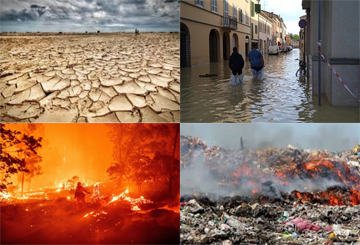
Climate Change: 2024 broke all records for being the hottest year
According to the United Nations World Meteorological Organization’s report on weather, climate and water resources, 2024 broke records for being the hottest year, with an increase in temperature of 1.5 degrees Celsius. According to the Climate Action Monitor 2024 report, 2024 broke 15 temperature records worldwide, with global impacts, with February in South Africa being the driest month of the century.
Climate Change and Environmental Disasters: 2024
As we move further into 2024, the impacts of climate change continue to accelerate, leading to more frequent and severe environmental disasters. The scientific consensus is clear: climate change is no longer a distant threat—it is an ongoing crisis. The year 2024 is witnessing a deepening of the climate emergency, characterized by extreme weather events, shifting ecosystems, and intensifying human vulnerability. Here’s a look at the key developments and trends in climate change and environmental disasters in 2024:
1. Rising Global Temperatures
By 2024, global temperatures have continued to rise, with the World Meteorological Organization (WMO) predicting that the average global temperature for 2024 will likely be among the hottest on record. This trend reflects a long-term pattern, with 2016, 2020, and 2023 already recorded as some of the hottest years in history. Rising temperatures continue to have cascading effects on ecosystems, human health, and global economies.
Key Observations:
- El Niño has returned in a significant way in 2024, amplifying global temperature spikes. El Niño events are associated with warmer-than-average sea surface temperatures in the Pacific Ocean, leading to more extreme heat waves and altered weather patterns across the globe.
- Arctic ice melt continues at an alarming pace, contributing to global sea level rise, with projections showing that the Arctic Ocean could be ice-free during summers within a few decades.
2. Heat waves and Health Impacts
Heat waves are becoming more frequent, intense, and widespread, affecting regions from Europe and the United States to South Asia and Australia.
- 2024 Heat waves: Record-breaking temperatures have been reported across parts of Europe, the Middle East, and North America. In July 2024, parts of Spain, Italy, and the United States saw sustained temperatures exceeding 45°C (113°F), straining public health systems, energy grids, and agricultural production.
- Health Consequences: The human toll of these extreme heatwaves is increasingly evident, with heat-related illnesses and fatalities rising. Vulnerable populations, such as the elderly, children, and those with pre-existing health conditions, are most at risk. The World Health Organization (WHO) has emphasized the link between extreme heat and higher rates of heat strokes, cardiovascular problems, and respiratory distress.
3. Wildfires: A Growing Crisis
The frequency and intensity of wildfires continue to escalate in 2024, driven by rising temperatures, prolonged droughts, and changing precipitation patterns due to climate change.
- United States: The western U.S., especially California, continues to experience devastating wildfire seasons. In 2024, catastrophic fires ravaged parts of California, Oregon, and Washington, exacerbated by dry conditions and high winds. Firefighters are facing increasingly difficult challenges due to the scale and unpredictability of these fires.
- Australia: After the extreme 2019-2020 bushfires, Australia has faced more intense fire seasons, with the 2024 bushfire season predicted to be particularly severe due to high temperatures and low rainfall. Fires in New South Wales and Queensland have been described as some of the most destructive in decades.
- Mediterranean Wildfires: Countries like Greece, Italy, and Turkey are also experiencing more frequent wildfires, with large areas of forest being destroyed. These fires are threatening wildlife, local economies, and health systems, as smoke travels long distances, impacting air quality across borders.
4. Flooding and Extreme Rainfall
Flooding remains one of the most destructive environmental disasters linked to climate change, with rising sea levels and extreme rainfall contributing to more frequent and severe flooding events in 2024.
- Europe: In 2024, parts of Europe experienced record rainfall, leading to flash floods and river flooding in countries like Germany, the UK, and France. The Rhine River, which flows through several countries in Europe, reached unprecedented water levels in 2024, causing severe damage to infrastructure and displacing thousands of people.
- South Asia: Countries like India, Bangladesh, and Pakistan have seen significant flooding in 2024. The annual monsoon season has become more erratic, leading to catastrophic floods. These floods are compounded by overpopulation, poor infrastructure, and deforestation, exacerbating the vulnerability of these regions.
- Coastal Flooding: Sea-level rise is contributing to regular coastal flooding in cities such as Miami, New York, and Venice, where “sunny-day flooding” is becoming a daily occurrence in some areas. Rising sea levels are also increasing the risk of storm surges during hurricanes and typhoons.
5. Cyclones, Hurricanes, and Typhoons
The frequency and intensity of cyclones, hurricanes, and typhoons have been notably impacted by climate change. Warmer ocean temperatures provide more energy for these storms, resulting in stronger and more destructive systems.
- Atlantic Hurricanes: The Atlantic hurricane season in 2024 has been marked by unusually powerful hurricanes, with multiple Category 4 and 5 storms making landfall in the Caribbean and the southeastern United States. Hurricane Ida (2024) struck Louisiana with unprecedented strength, causing widespread power outages and significant damage to infrastructure.
- Pacific Typhoons: In the Pacific, typhoons have been more intense and erratic in 2024, affecting the Philippines, Japan, and parts of Southeast Asia. Typhoon Mawar in early 2024 caused widespread destruction in the Philippines, bringing heavy rains and devastating floods that displaced millions.
6. Droughts and Water Scarcity
Droughts continue to affect large areas of the world, from North America to Sub-Saharan Africa. In many regions, prolonged periods of low rainfall and high evaporation rates are drying up rivers, lakes, and aquifers, exacerbating water scarcity.
- California and the Western U.S.: 2024 has seen ongoing drought conditions in the western U.S., with areas like California and Nevada facing water shortages. Reservoirs in California are at critically low levels, impacting agriculture, drinking water supplies, and hydropower generation.
- East Africa: The Horn of Africa has been hit by a severe drought in 2024, exacerbated by both climate change and ongoing political instability. The drought has contributed to food insecurity, with millions facing hunger, malnutrition, and displacement.
- Mexico and Central America: Mexico, Guatemala, and Honduras have faced extreme drought conditions, affecting agriculture and leading to widespread crop failures and food shortages. Water availability in these countries is becoming a critical issue, further exacerbating poverty and migration pressures.
7. Sea-Level Rise and Coastal Displacement
The continued melting of glaciers and polar ice caps, along with the thermal expansion of seawater, is leading to rising sea levels, which threaten low-lying coastal areas worldwide.
- Pacific Island Nations: In 2024, countries such as Kiribati, Maldives, and Tuvalu are facing existential threats from sea-level rise. Some of these nations are now exploring relocation options for their populations, as their land is becoming uninhabitable.
- U.S. East Coast and Gulf Coast: Cities like Miami, New Orleans, and Houston are facing increasing flooding due to rising sea levels. In 2024, Miami experienced several days of “sunny-day flooding,” where king tides caused flooding on dry days, illustrating the growing risks to coastal infrastructure.
8. Global Response and Adaptation Efforts
Governments, scientists, and activists are stepping up efforts to address the growing climate crisis, but the response in 2024 remains uneven across the globe.
- The United Nations Climate Conference (COP29): In December 2024, COP29 in Dubai focused on strengthening global commitments to limit warming to 1.5°C. While progress has been made in some areas, particularly with increased commitments to reduce emissions and finance climate adaptation for developing nations, the pace of change is still seen as insufficient by climate activists and vulnerable countries.
- Renewable Energy: The transition to renewable energy sources continues to accelerate. In 2024, several countries have significantly expanded their solar, wind, and geothermal energy capacity. Notably, China, India, and the European Union are making substantial investments in renewable infrastructure. However, fossil fuel dependency remains high in many regions, slowing global progress.
- Climate Migration: The number of climate refugees—people displaced by climate-related disasters such as floods, droughts, and sea-level rise—is rising. In 2024, international organizations like the UN High Commissioner for Refugees (UNHCR) are calling for more robust systems of support for climate migrants, who are increasingly seen as part of the global refugee crisis.
9. Conclusion: The Imperative for Action
The year 2024 marks a pivotal moment in the climate crisis, with environmental disasters becoming more frequent and devastating. While there is growing awareness and some positive developments, the pace of action remains inadequate. The effects of climate change are not just an environmental issue; they are a global socio-economic challenge, affecting food security, water availability, health, and political stability.
The urgency of scaling up efforts to mitigate greenhouse gas emissions, protect vulnerable communities, and adapt to a rapidly changing world has never been clearer. Immediate action is needed to avert the most catastrophic impacts and build resilience for future generations.
